Growth marketing was built on continuous improvement.
Experiment. Optimize. Compound.
And yet—if you’re a brand leader today—it probably doesn’t feel like growth is compounding.
Despite more data, more tools, and more optimization than ever before, hitting growth targets is getting harder. ROI is slipping. Effort is rising.
That’s not a discipline problem.
It’s a model problem.
The traditional growth model was designed for a version of the consumer that no longer exists—one without context, identity, or lived experience shaping their decisions.
And as consumers have evolved, that mismatch has become costly.
In this article, I’m applying the same continuous-improvement lens that defines growth marketing—to the growth marketing playbook itself.
Listen on Apple Podcasts | Spotify | YouTube Music
What Is Growth Marketing?
Growth marketing is a data-driven approach to building sustainable, long-term growth by continuously experimenting across the full customer lifecycle—from awareness to retention and beyond.
Unlike traditional marketing, growth marketing focuses not just on acquiring customers, but on reducing friction, improving customer experience, and compounding value over time through learning and iteration.
Why Growth Marketing Isn’t Working Like It Used To
When growth marketing works, it works because of one simple idea:
improvement compounds.
You run experiments, learn from real behavior, and use those insights to create better experiences that drive long-term growth.
That’s why growth marketing has always gone beyond channels or tactics. At its best, it’s a mindset—a way of learning your way into growth.
The challenge is that most teams today are still applying that mindset through a model that hasn’t meaningfully evolved alongside the consumer.
And that matters, because models shape what we measure, what we optimize, and ultimately who growth works for.
So before we talk about what needs to change, we need to look closely at the model most growth teams still rely on.
What Is the AAARRR Growth Marketing Model?
AARRR stands for Awareness, Acquisition, Activation, Retention, Referral, and Revenue.
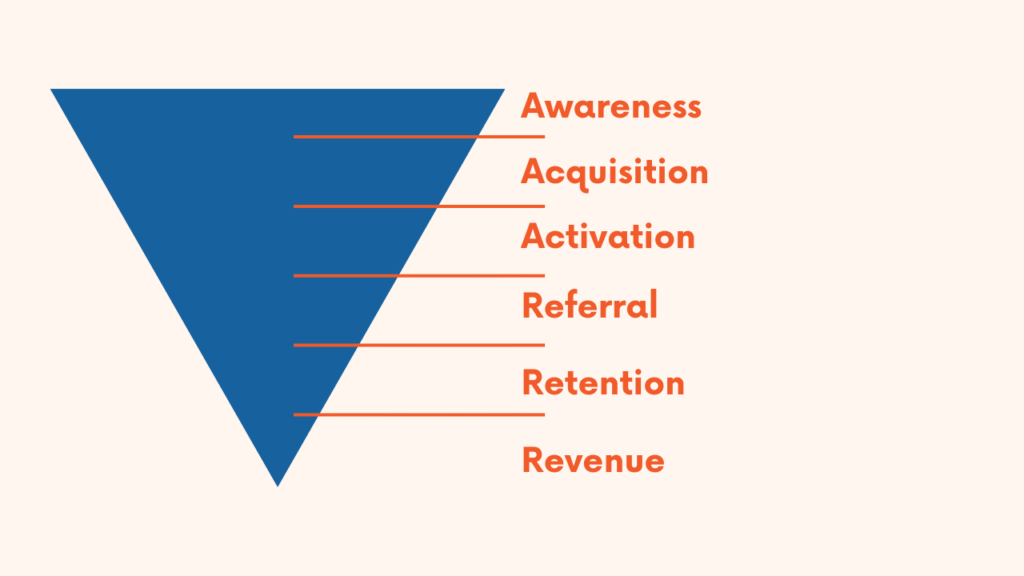
And on the surface, it’s a solid model. It’s logical. It’s intuitive. It’s helped countless brands grow over the years.
But it was built to scale growth through a general market approach.
And while general market marketing was incredibly efficient for a long time, it’s no longer as effective as it used to be.
Not because brands stopped executing well—but because the market itself changed.
Why General Market Growth Struggles in a Fragmented World
The American Marketing Association recently published its 2026 Future Trends in Marketing report. One of the key shifts it highlights is the move toward building trust in an increasingly fragmented world.
The AMA summarizes it this way:
“Traditional segmentation models built around demographics no longer capture the forces shaping consumer behavior. The center of influence has shifted toward identity-based communities, where networks are bound by shared values, beliefs, and cultural norms.”
I sat down with Bennie F. Johnson from the AMA to talk about what this shift means for general market marketing.
His take was clear: general market marketing isn’t obsolete—but it’s no longer optimal. “The reality is general marketing can still work. It’s a question of good, better, best. It’s a question of meeting goals versus exceeding. It’s a question of surviving versus thriving.”
Johnson added, “What we know is if you want to be able to separate your brand, distinguish your brand, thrive in markets and space in there, it’s going to be best to evolve to these more relevant approaches to marketing.”
Why Scale Without Intention Creates Friction
It’s hard to find people like you in a crowd of a million.
And it’s just as hard to communicate “people like you belong here” when you’re speaking to everyone at once.
I once tried coordinating preferences for a vacation with fewer than twenty people—and even that required real intention.
Scale isn’t the problem.
Scale without intention is.
And this is the core limitation of AARRR as it’s commonly applied today.
It assumes a general market approach—one that no longer reflects how people make decisions in a fragmented world.
Why is growth marketing becoming less effective for many brands?
Growth marketing becomes less effective when the models guiding optimization fail to reflect how modern customers actually make decisions. When growth strategies prioritize scale and averages over relevance and context, friction increases and conversion suffers.
Which brings us to the next question: what exactly is AARRR optimizing for?
How AARRR Optimizes for Scale—Not Relevance
The AARRR model didn’t emerge by accident. It was designed to solve a very specific problem: how to grow efficiently at scale.
At a time when markets were less fragmented, channels were fewer, and audiences were easier to reach in aggregate, growth required systems that could expand reach, improve efficiency, and standardize measurement across large populations. AARRR did exactly that.
In fact, its strength comes from what it optimizes for.
First, AARRR optimizes for reach.
Awareness and Acquisition sit at the top of the model for a reason. Growth is assumed to begin with exposure at scale—the more people you reach, the more opportunities you create downstream. Volume becomes the lever. Reach becomes the proxy for potential.
That logic works well when audiences are relatively homogenous. But as markets fragment, reach alone becomes a blunt instrument. Exposure without context flattens difference. The signal travels, but resonance weakens.
Second, AARRR optimizes for efficiency.
Conversion rates, customer acquisition cost, lifetime value, velocity through the funnel—these metrics reward speed and consistency. The goal is to move people through the system with as little friction as possible.
Efficiency depends on predictability. The fewer exceptions you have to account for, the easier it is to optimize. But relevance introduces variation. It requires slowing down to understand different needs, motivations, and constraints—things efficiency-driven systems are not built to prioritize.
Third, AARRR optimizes for standardized measurement.
To work at scale, metrics need to be comparable. That’s where averages come in. Average conversion rates. Average time to activation. Average lifetime value.
Averages make performance legible. They allow teams to benchmark, forecast, and optimize. But they also obscure variation. When averages become the center of gravity, the “average customer” becomes the reference point for growth decisions.
Outliers get treated as noise. Edge cases get deprioritized. And relevance—by definition—is most visible at the edges.
This is where the tradeoff becomes clear.
AARRR doesn’t break down because it’s flawed. It creates friction because of what it’s designed to do. Models that optimize for scale naturally favor reach over resonance, efficiency over nuance, and averages over specificity.
For a long time, those tradeoffs were acceptable. The efficiency gains outweighed the losses. But in a fragmented market—where influence travels through smaller, identity-based networks—the cost of optimizing for the “average” customer has increased.
When growth models prioritize what’s easiest to measure at scale, relevance is the first thing to slip. And in modern markets, relevance isn’t a nice-to-have—it’s the difference between momentum and stagnation.
Because when growth strategies are optimized for averages, relevance gets lost at the edges.
And today, the edges are where growth lives.
Where Identity Friction Shows Up Across the Funnel
So let’s walk through the AARRR model—and look at where identity friction shows up in practice.
As a reminder, friction is the enemy of growth.
The more friction that exists at each stage of the funnel, the harder it becomes to attract, convert, and retain the people you’re trying to serve.
What I’m about to walk you through isn’t theoretical. These are real examples—from client work, growth audits, and research where consumers explained, in their own words, why they disengaged.
Let’s start at the top.
Awareness
At the awareness stage, brands often invest heavily in paid media to reach new audiences and introduce their product or service.
But here’s where identity friction shows up.
If your media strategy relies exclusively on general market channels that underrepresented or underserved communities don’t actively engage with, you’re invisible to them—no matter how much you spend.
I worked with a client who wanted to grow within the Hispanic community but was running only general market ads. When I audited the campaign and spoke directly with consumers, the feedback was clear: people didn’t see themselves reflected in the ads, so they tuned them out.
They didn’t see “people like me.”
So they assumed the product wasn’t for them.
That’s identity friction at the awareness stage.
Acquisition
Identity friction doesn’t stop once someone is aware of you—it shows up even when intent is high.
Here’s a simple example.
My husband once searched for a barbershop nearby—but he searched in Spanish. Nothing relevant came up. Standing right next to him, I searched in English and found a barbershop less than fifty feet away.
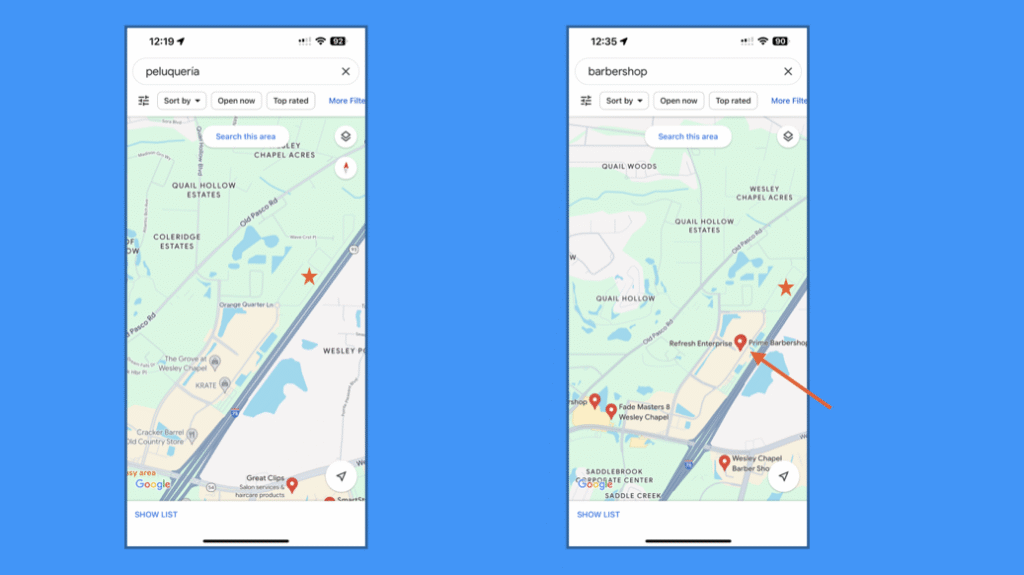
Same location. Same intent.
Different identity signal.
The acquisition channel simply wasn’t optimized for how he searched.
This shows up constantly in food and hospitality. Our family follows a gluten-free diet for health reasons. When we’re in a new area, we search for “gluten-free” or “gluten-friendly” restaurants nearby.
Many restaurants do have options that would work for us—but because they haven’t labeled or communicated that information clearly, we never find them. We go elsewhere.
Intent exists.
Demand exists.
But identity friction breaks the funnel.
Activation
Activation is often designed to get customers to their “aha moment” as quickly as possible.
But speed means nothing if the experience isn’t usable.
Imagine a customer who is hearing-impaired logging into a new platform. The onboarding relies heavily on explainer videos—but those videos have no captions or transcripts.
That customer can’t access the information they need to experience value.
Not because they lack interest.
Not because the product isn’t good.
But because the activation experience wasn’t designed with their needs in mind.
That’s identity friction blocking activation.
Retention
Retention depends on more than satisfaction—it depends on belonging.
If people don’t feel seen or understood, they disengage.
I spoke with a woman who joined a networking group when she first started her business. She eventually left—not because the group lacked expertise, but because she didn’t feel comfortable there.
She joined another group with more “people like her.”
She felt understood.
She felt supported.
That sense of belonging directly affected whether she stayed.
Referral and Revenue
People don’t recommend brands to “people like them” unless they’ve had a stellar experience.
And when identity friction exists anywhere in the journey, conversion rates suffer.
Lower trust leads to lower activation.
Lower activation leads to lower retention.
Lower retention leads to fewer referrals and less revenue.
Not because people aren’t interested—but because the experience wasn’t designed for them.
The Pattern
When AARRR is applied without an identity lens, friction compounds across the funnel.
And that’s the core issue.
The model assumes a general market customer.
But the market no longer behaves that way.
Evolving AARRR: An Identity-Layered Growth Model
So at this point, you might be wondering— does applying an identity lens mean you now need fifty different marketing funnels to be effective?
No. It doesn’t.
An identity-layered approach to growth isn’t about multiplying funnels.
It’s about being intentional—and letting what you know about your customers determine where and how the funnel needs to adapt.
The starting point is simple.
You first need to identify the different identities that already exist within your audience—or the ones you want to reach next.
Then you make a deliberate choice about which audiences you’re prioritizing, and ensure the funnel is optimized for their ability to move through it.
Sometimes that means making small adjustments to what you’re already doing.
Other times, it means rethinking parts of the journey entirely so the experience is actually relevant to the people you’re trying to serve.
Here’s what that looks like in practice.
Let’s say you want to reach the Hispanic audience in the U.S.
In some cases, representation within general market campaigns may be enough—so people can quickly see that what you offer is for “people like me.”
But in other cases, relevance requires more than representation.
It may mean creating distinct awareness or acquisition content that reflects different language preferences, cultural context, or decision-making needs.
I spoke with Selim Dahmani, a growth marketer at HubSpot responsible for the French-speaking market. He shared this insight:
“In my experience, native blog posts created with a regional SEO approach bring four times more traffic on average than localized blog posts.”
That’s a perfect example of identity-layered growth in action.
Same funnel. Same objective.
Different execution—because relevance changes outcomes.
And this approach can’t stop at acquisition.
Many brands invest heavily in identity-aware awareness and acquisition—only to fall short at activation.
I’ve worked with clients who built strong onboarding and support experiences for English-speaking customers, then invested significantly in acquiring Spanish-speaking customers—without having the resources in place to help those customers succeed once they signed up.
The result?
High intent.
Low activation.
Unnecessary friction at the moment value should be delivered.
An identity-layered AARRR model forces consistency across the entire journey—not just the top of the funnel.
At its core, this approach requires deep customer intimacy.
You need to understand what different people need from you at each stage of the journey—and where a one-size-fits-all experience creates friction instead of momentum.
That’s why data matters here.
Understanding the identities already present in your customer base—and the communities driving growth across the market—is the foundation for evolving AARRR without making it more complex.
You’re not building more funnels.
You’re building a more relevant one.
What Changes in Practice
This doesn’t mean throwing your entire growth marketing playbook out the window.
It means evolving it.
Think of it like this: your life changes when your family grows.
At one point, you were operating as a single person. Then you married into a new family—with a different culture, different norms, and different needs. You didn’t stop being who you were. You integrated. You adapted. You created new ways of operating based on a new reality.
That’s what an identity-layered growth approach requires.
The first thing that changes is your inputs.
You need to clearly identify which customer identities you’re going to prioritize when designing your funnel and overall experience. Not every audience at once—intentionally chosen ones.
From there, you need the inputs that help you serve them well.
That’s where customer intimacy comes in—understanding what those audiences need, expect, and experience at each stage of the journey.
The next step is mapping your entire funnel and customer journey through that lens.
As you do that, you’re asking three simple questions:
- What works well as-is?
- What needs to be adjusted for this specific community?
- And where do we need a different approach entirely?
Looking at the journey through those three buckets helps you quickly identify where gaps exist, what to prioritize first, and what systems you need to sustain this work over time.
Measurement matters too.
I’ve worked with clients who had strong visibility into how different customer groups were performing across their funnel—by identity. In one case, that data made it clear the brand was underperforming with African-American consumers, which allowed us to pinpoint exactly where friction was occurring.
I’ve also worked with brands that had no way to distinguish performance by identity at all. And without that visibility, it was nearly impossible for them to understand who they were actually serving well—and who they weren’t.
The good news is this:
you don’t need an entirely new set of KPIs.
But you do need to understand how performance differs—or doesn’t—based on identity.
Because averages can hide friction.
And visibility is what allows growth to compound.
If you want a deeper dive with concrete examples of how teams do this well, episode 146 goes into much more detail. I’ll link to it in the show notes.
How Should Growth Marketing Evolve?
Growth marketing needs to evolve by applying its experimentation mindset not just to tactics, but to the models that guide decision-making.
In fragmented markets, growth requires layering audience context and identity into how teams prioritize experiments, measure success, and design customer experiences—reducing friction and increasing relevance across the funnel.
The Role of Growth Marketing Now
Growth marketing has always been about continuous improvement.
Learning faster. Reducing friction. Compounding results over time.
What’s changed isn’t that goal—it’s the environment we’re operating in.
Today’s consumers are more diverse, more values-driven, and more context-aware than the models we’re still using to reach them. And when growth strategies don’t reflect how people actually make decisions, friction shows up everywhere—slowing momentum instead of compounding it.
That’s why this isn’t about abandoning the tools and frameworks that got us here.
It’s about evolving them.
An identity-layered approach to growth doesn’t make marketing more complex.
It makes it more precise.
It helps brands stop optimizing for an imaginary “average” customer—and start designing experiences that real people can move through with confidence, clarity, and trust.
And when friction is reduced across the journey—when people can see themselves, understand the value, and feel supported—growth doesn’t just happen faster.
It lasts longer.
That’s the opportunity in front of growth teams right now.
To apply the same continuous-improvement mindset we bring to campaigns and channels—to the models that shape our thinking in the first place.
Because growth marketing isn’t just about scaling systems anymore.
It’s about earning relevance.
And when relevance compounds, growth does too.
Frequently Asked Questions
Is growth marketing still effective?
Yes—but only when growth strategies evolve alongside customer behavior. Growth marketing is most effective when it prioritizes relevance, reduced friction, and long-term value creation, not just scale and efficiency.
How is growth marketing different from traditional marketing?
Traditional marketing often focuses on campaigns and acquisition. Growth marketing emphasizes continuous learning, experimentation across the customer lifecycle, and compounding improvements over time.
What’s the biggest mistake brands make with growth marketing?
The biggest mistake is applying growth models built for general markets without accounting for fragmented audiences, context, and lived experience—leading to friction and diminishing returns.
What’s Slowing Your Growth?
Take this 2-3 minute diagnostic to find out.
Found this post useful?
There’s more where that came from—get insights on the new rules of growth delivered to your inbox.